Unterwegs? So machst du bessere Fotos von deiner Freundin
Einfache Posen, passende Kamerawinkel und praktische Fototipps, damit sich deine Freundin wohlfühlt und eure Bilder natürlich und authentisch wirken und zu Erinnerungen werden, die ihr gern behaltet
Von Pajoox-Redaktion · 09.07.2026
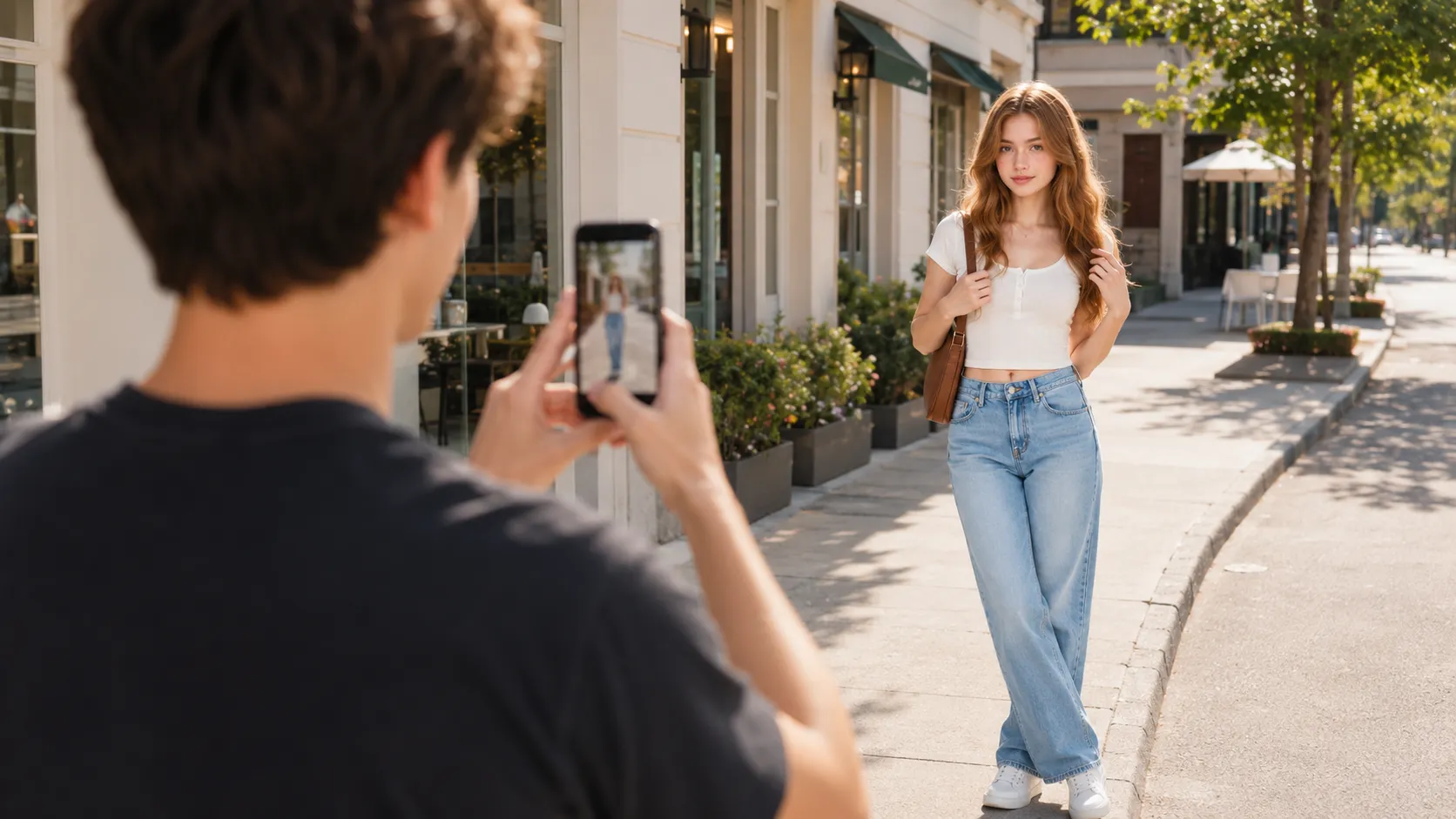
Gute Fotos von deiner Freundin hängen weder vom neuesten Smartphone noch von komplizierten Fototricks ab. Meist entscheiden drei Dinge darüber, ob ein Bild schnell vergessen ist oder ihr wirklich gefällt: wo du stehst, wie du den Bildausschnitt wählst und ob sie sich in diesem Moment wohlfühlt.
Ein gutes Foto sollte sich wie eine Erinnerung anfühlen, nicht wie eine Aufgabe. Du musst also nicht jedes kleine Detail vorgeben. Ein einfacher Plan reicht: Wähle einen ruhigen Hintergrund, finde einen vorteilhaften Winkel, gib ihr eine unkomplizierte Posenidee und mache mehrere Varianten, aus denen sie auswählen kann.
Hier findest du praktische Tipps, mit denen du bessere Fotos von deiner Freundin machen kannst – beim Ausgehen, auf Reisen, bei einem Spaziergang durch die Stadt oder einfach an einem ganz normalen gemeinsamen Tag.
Beginne mit der Umgebung, nicht mit der Pose
Bevor du sie bittest, sich hinzustellen oder zu posieren, schau dir die Umgebung an. Gibt es ein Caféschild, eine schöne Straßenecke, einen Sonnenuntergang, einen Spiegel, eine Wand mit interessanter Struktur oder einen ruhigen Weg? Eine passende Umgebung gibt dem Foto einen Zusammenhang. Außerdem wirkt die Pose weniger ungewohnt, weil sie etwas hat, worauf sie reagieren oder womit sie interagieren kann.
Mach vor dem Fotografieren kurz diesen Check:
- Ist der Hintergrund ruhig genug, damit sie gut zur Geltung kommt?
- Befinden sich störende Gegenstände direkt hinter ihrem Kopf oder ihren Schultern?
- Ist das Licht weich, gleichmäßig oder zumindest nicht zu hart?
- Kannst du einen Schritt nach links, rechts, näher heran oder weiter zurück gehen, damit der Bildausschnitt ruhiger wirkt?
Wenn du diese Fragen mit Ja beantworten kannst, bist du schon auf einem guten Weg. Eine aufgeräumte Umgebung lässt selbst eine einfache Pose bewusster wirken.
Gib immer nur eine einfache Anweisung
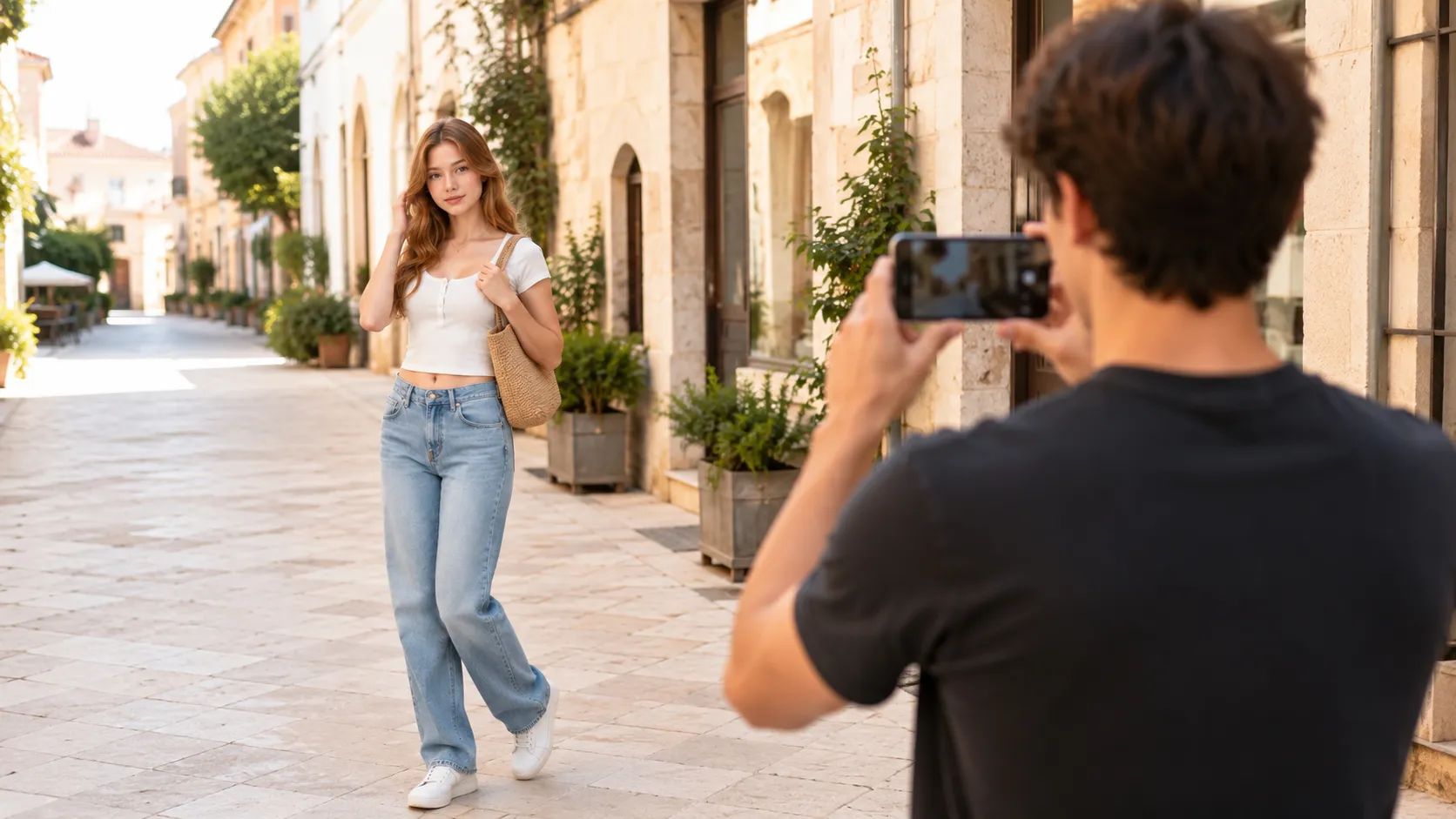
Zu viele Anweisungen auf einmal sorgen schnell dafür, dass sich jemand unwohl fühlt. Statt alles gleichzeitig zu erklären, schlage nur eine kleine Bewegung vor. Zum Beispiel: Geh langsam auf mich zu, halte deine Tasche mit einer Hand, schau zur Seite, streich dir durch die Haare oder lehn dich leicht an die Wand.
Solche Hinweise funktionieren, weil sie auf natürlichen Bewegungen beruhen und nicht auf steifen Posen. Außerdem helfen sie dabei, nicht einfach stillzustehen und sich zu fragen, wohin mit den Händen.
Ein paar einfache Posenideen:
- Geh langsam und schau leicht an der Kamera vorbei.
- Halte dein Getränk oder deine Tasche mit einer Hand und lass die andere locker.
- Dreh deine Schultern etwas zur Seite, statt ganz gerade nach vorn zu stehen.
- Schau für ein Foto nach unten und beim nächsten wieder in die Kamera.
- Mach einen Schritt nach vorn, als würdest du einfach weitergehen.
Es geht nicht darum, dass sie etwas vorspielt. Sie soll sich wohlfühlen, während eine kleine Bewegung dem Foto mehr Lebendigkeit gibt.
Nutze bei Ganzkörperfotos einen etwas niedrigeren Smartphone-Winkel
Bei Ganzkörper-, Outfit- oder Straßenfotos solltest du das Smartphone nicht zu hoch halten und stark nach unten richten. Dadurch können die Körperproportionen gestaucht wirken und der Hintergrund verliert an Wirkung.
Halte das Smartphone stattdessen etwa auf Hüft- bis Brusthöhe und möglichst gerade. Geh weit genug zurück, damit das gesamte Outfit ins Bild passt, und lass etwas Platz über ihrem Kopf und unter ihren Füßen. Falls dein Smartphone ein Raster einblenden kann, nutze es, um senkrechte Linien gerade auszurichten – besonders bei Gebäuden, Türen und Wänden.
Ein einfacher Aufbau für Ganzkörperfotos:
- Stell dich etwa zwei bis drei Meter entfernt hin.
- Halte das Smartphone auf Brusthöhe oder etwas tiefer.
- Richte die Kamera gerade aus, statt sie nach unten zu neigen.
- Platziere sie etwas außerhalb der Bildmitte, wenn der Hintergrund interessante Linien bietet.
- Mach zur Abwechslung ein Hochformat und eine etwas weitere Aufnahme.
So wirkt das Foto ruhiger und ausgewogener, ohne übermäßig inszeniert auszusehen.
Geh für nähere Porträts selbst näher heran, statt stark zu zoomen
Wenn du ein näheres Porträt aufnehmen möchtest, solltest du dich nicht nur auf den Digitalzoom verlassen. Geh nach Möglichkeit selbst näher heran oder nutze eine für Porträts geeignete Kameraoption, falls dein Smartphone eine bietet. Halte einen angenehmen Abstand und positioniere die Kamera ungefähr auf Augenhöhe oder leicht darüber.
Bitte sie, ihr Gesicht etwas zum Licht zu drehen. Das wirkt oft weicher, als wenn sie direkt in hartes Licht schaut. Bei starker Sonne eignet sich offener Schatten neben einem Gebäude, unter einem Baum oder an einem überdachten Weg. Im Schatten lassen sich natürliche Gesichtsausdrücke leichter festhalten, weil sie die Augen nicht zusammenkneifen muss.
Für eine einfache Nahaufnahme:
- Lass möglichst etwas Abstand zwischen ihr und dem Hintergrund.
- Bitte sie, die Schultern leicht anzuwinkeln.
- Lass sie erst in die Kamera schauen, dann weg und anschließend wieder zurück.
- Mach mehrere Fotos, während ihr miteinander redet, damit ihr Ausdruck natürlich bleibt.
Das beste Porträt entsteht oft direkt nach der eigentlichen Pose, wenn sie sich wieder entspannt.
Lass die Hände natürlich wirken, indem du ihnen eine Aufgabe gibst
An den Händen wirken viele Fotos schnell verkrampft. Die einfachste Lösung ist eine kleine Handlung. Sie kann eine Sonnenbrille halten, einen Ärmel richten, eine Kette berühren, einen Kaffee tragen, den Träger ihrer Tasche festhalten oder eine Hand locker in die Tasche stecken.
Vermeide erzwungene, völlig symmetrische Posen. Natürliche Fotos leben oft von kleinen Unterschieden: ein lockeres Knie, eine leicht gedrehte Schulter oder eine Hand, die etwas Unauffälliges tut. Dadurch wirkt das Bild lässiger.
Wenn sie sagt, dass sie nicht weiß, wie sie posieren soll, probiere Folgendes:
- Bitte sie, zwei Schritte zu gehen und kurz stehen zu bleiben.
- Lass sie zunächst wegschauen, statt direkt in die Kamera.
- Bitte sie, das Gewicht auf ein Bein zu verlagern.
- Lass sie etwas halten, das sie ohnehin dabeihat.
Kleine Bewegungen sind einfacher als große Posen – besonders in der Öffentlichkeit.
Mach eine kurze Serie statt nur eines Fotos
Bei einem einzelnen Foto kann leicht etwas schiefgehen: Jemand blinzelt, die Hand wirkt ungewohnt oder plötzlich ist der Hintergrund voller Menschen. Mach deshalb lieber eine kurze Serie: eine weitere Aufnahme, ein Ganzkörperfoto, ein Halbporträt und ein näheres Porträt.
Du kannst auch die Blickrichtung und Bewegung variieren:
- Ein Foto mit Blick in die Kamera.
- Eines mit Blick zur Seite.
- Eines beim Gehen.
- Eines beim Lachen oder Reden.
So hat sie mehr Auswahl und das Fotografieren fühlt sich entspannter an. Du versuchst nicht, mit nur einem Versuch das perfekte Bild zu erzwingen. Stattdessen hältst du mehrere mögliche Momente fest.
Nutze Pajoox, wenn dir die Ideen fehlen
Manchmal ist nicht das Auslösen das Schwierigste, sondern die Frage, was man überhaupt ausprobieren soll. Pajoox ist für genau diese Situationen gedacht: Du befindest dich in einer echten Umgebung und brauchst praktische Ideen für Posen, Winkel und Bildaufbau.
Dabei steht nicht die KI selbst im Mittelpunkt. Pajoox nutzt KI-gestützte Hinweise zu Posen und Kamerawinkeln, um dich bei der Planung des Fotos zu unterstützen. Die App kann dir helfen, die aktuelle Umgebung einzuschätzen, natürliche Posenideen zu finden und eine passende Aufnahme mit dem Smartphone vorzubereiten.
Das ist zum Beispiel hilfreich, wenn ihr vor einem Café, an einer Straßenecke, an einem Reiseziel oder vor einem einfachen Alltagsmotiv steht und nicht wisst, was gut aussehen könnte.
Eine einfache Checkliste vor dem Fotografieren
Geh vor dem Foto kurz diese Punkte durch:
- Hintergrund: ruhig genug und nicht zu überladen.
- Licht: weich, gleichmäßig oder aus einer angenehmen Richtung.
- Winkel: Smartphone gerade, nicht zu stark geneigt.
- Pose: eine einfache Bewegung statt einer komplizierten Haltung.
- Bildausschnitt: genug Platz um den Körper und keine ungünstigen Schnitte an Gelenken.
- Stimmung: entspannt und ohne Zeitdruck.
Bei besseren Fotos von deiner Freundin geht es nicht darum, den Moment vollständig zu kontrollieren. Es geht darum, wahrzunehmen, was bereits da ist, und ihr dabei zu helfen, sich im Bild wohlzufühlen. Beginne mit einer einfachen Umgebung, gib nur eine leicht umsetzbare Anweisung, passe deinen Winkel an und mache eine kleine Auswahl an Aufnahmen. Oft reicht das schon, damit aus einem normalen Ausflug Fotos werden, die ihr beide gern behaltet.