How to Pose for Photos When You Don’t Know What to Do
Learn how to pose for photos when you feel stuck, with simple steps for your feet, shoulders, hands, movement, and the scene around you.
By Pajoox Editorial Team · Jul 22, 2026
The camera comes out, someone says “pose,” and your mind goes blank. Suddenly you are thinking about your hands, shoulders, face, and where to stand—all at once.
That is usually why photos start to feel stiff. It is not that you are bad at posing. You are simply trying to control too many details while reacting to the camera.
Learning how to pose for photos does not mean memorizing dozens of positions. A better approach is to make one small adjustment at a time: settle your feet, relax your shoulders, give your hands a simple task, and use the scene around you.
Why You Suddenly Feel Stiff in Photos
During normal life, you move without thinking about every part of your body. In front of a camera, you may try to stand straight, hold a smile, arrange both hands, and wait.
Instead of building a complete pose from nothing, begin with a small action. Take one step. Turn toward the light. Adjust a sleeve. Look at something nearby. An action gives your body a reason to move and takes some attention away from the camera.
Start With Your Feet
When you do not know what to do, start at the ground.
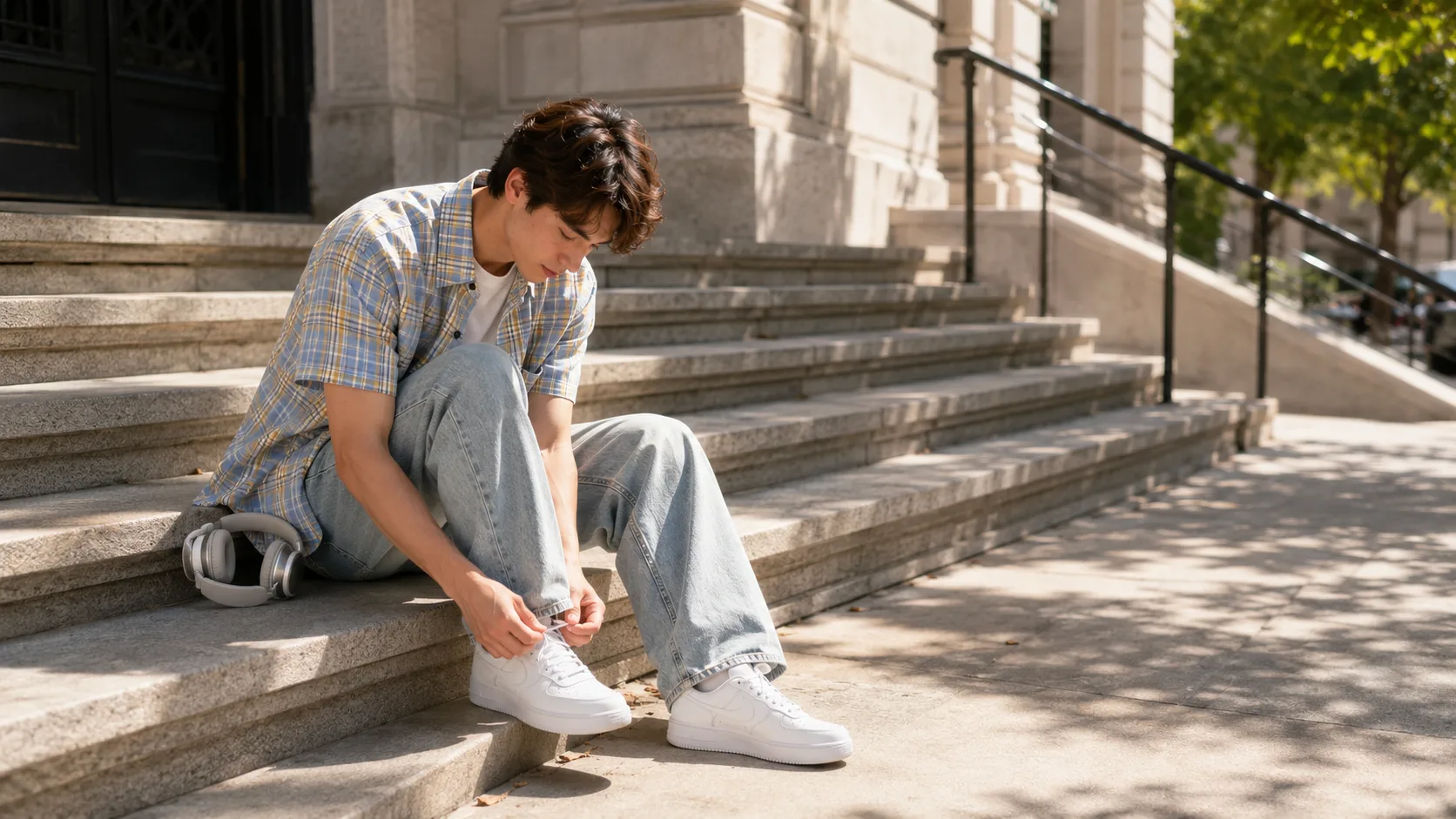
Standing with both feet even and facing forward can feel formal. Shift your weight onto one leg and let the other stay relaxed. Place one foot slightly forward, angle it to the side, or bend one knee a little.
For a full-body photo, try one of these:
- Take one small step toward the camera.
- Place one foot half a step behind the other.
- Turn your feet slightly away, then bring your shoulders back.
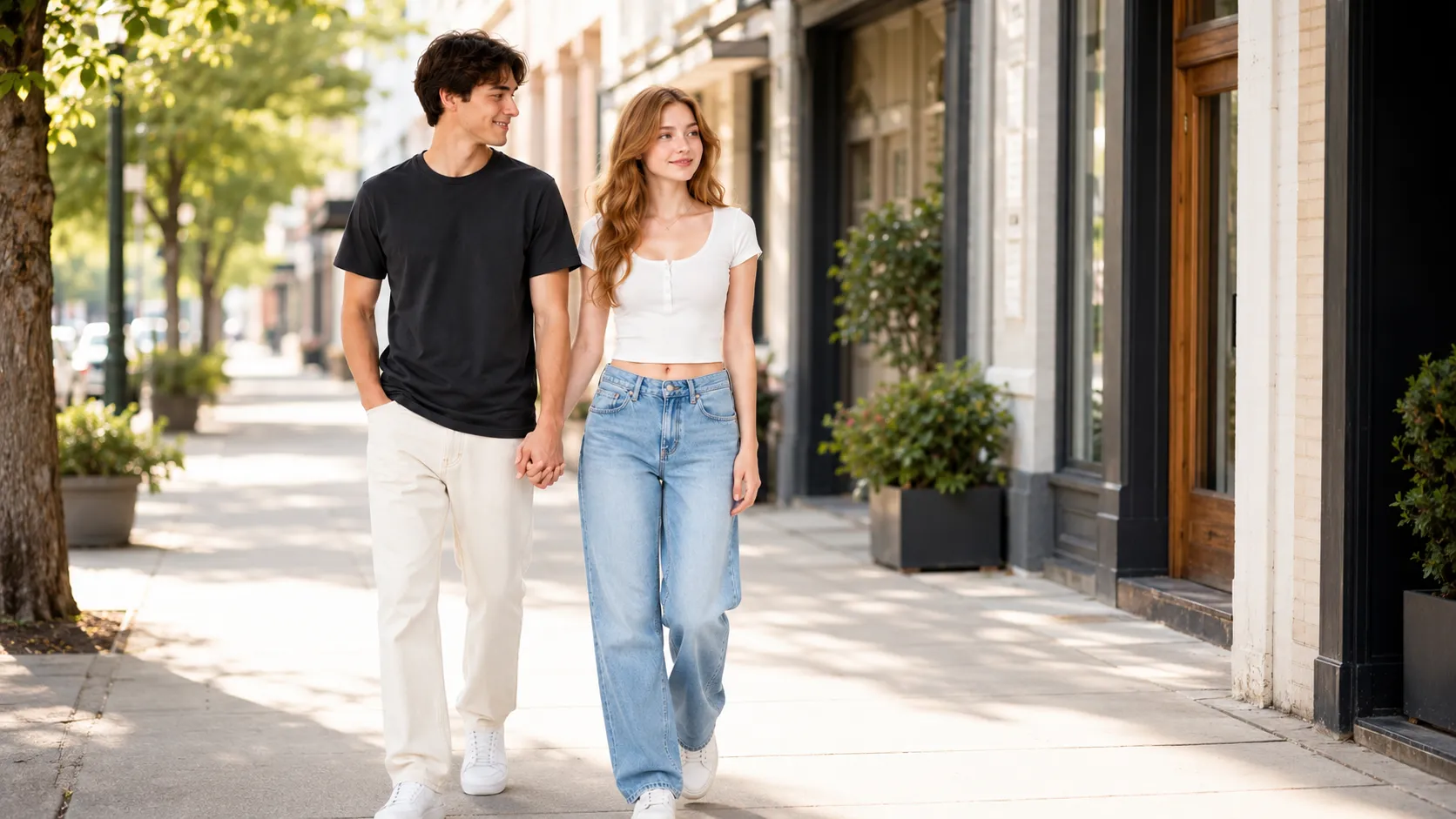
- Pause in the middle of a slow walk.
Keep the adjustment comfortable. Once your feet feel settled, the rest of the pose becomes easier.
Turn Slightly and Relax Your Shoulders
Perfect symmetry can make a casual photo look rigid. If your shoulders, arms, hips, and feet are lined up in the same way, the pose may feel too formal.
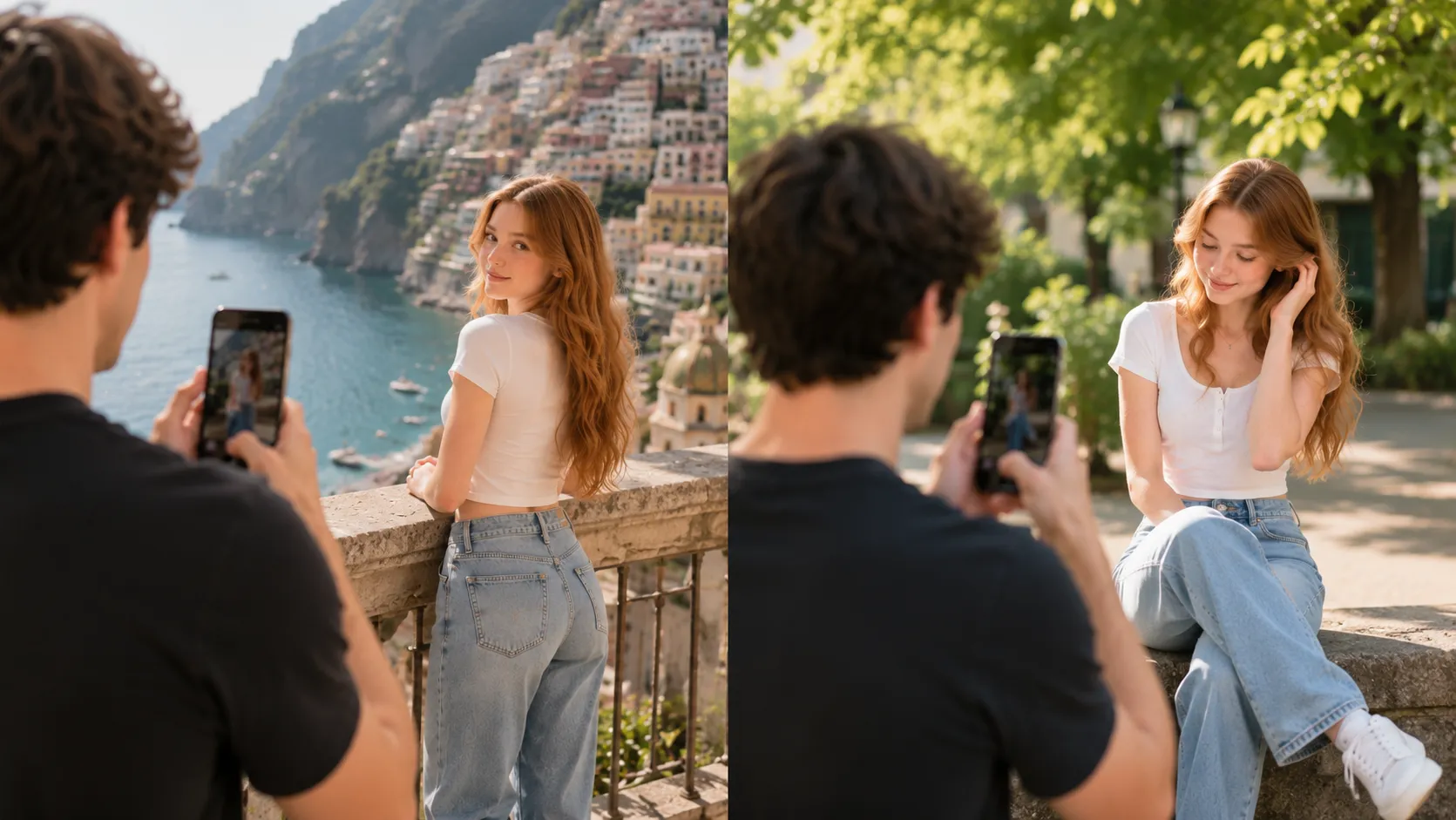
Turn your body slightly instead of facing the camera completely straight. Let one shoulder sit closer to the lens, then bring your face back toward the camera or look just past it.
Do not force exaggerated posture. Roll your shoulders once, let them drop, and keep your neck comfortable.
What to Do With Your Hands
Hands feel awkward when they are waiting for instructions. Give one hand a small, believable task.
Depending on the scene, you can:
- adjust a cuff, sleeve, or collar
- hold a bag strap
- rest one hand loosely near a pocket
- hold a coffee cup or phone
- touch a railing or table lightly
- move your hair away from your face
You do not need to arrange every finger or use a prop only for the photo.
If both hands still feel busy, give one hand a task and let the other rest naturally.
Use Movement Instead of Holding a Pose
Some people feel comfortable for the first second, then become tense while waiting. Movement prevents you from holding one position for too long.
Try repeating one short action while the photographer takes several frames:
- walk two or three slow steps
- turn away and look back
- sit down or begin to stand
- adjust a jacket, then lower your hand
- look to the side, then return your eyes to the camera
Move slightly slower than usual so the photographer can capture the transition. The most natural image may happen between the planned poses.
Decide Where to Look
You do not need to stare directly into the lens in every photo.
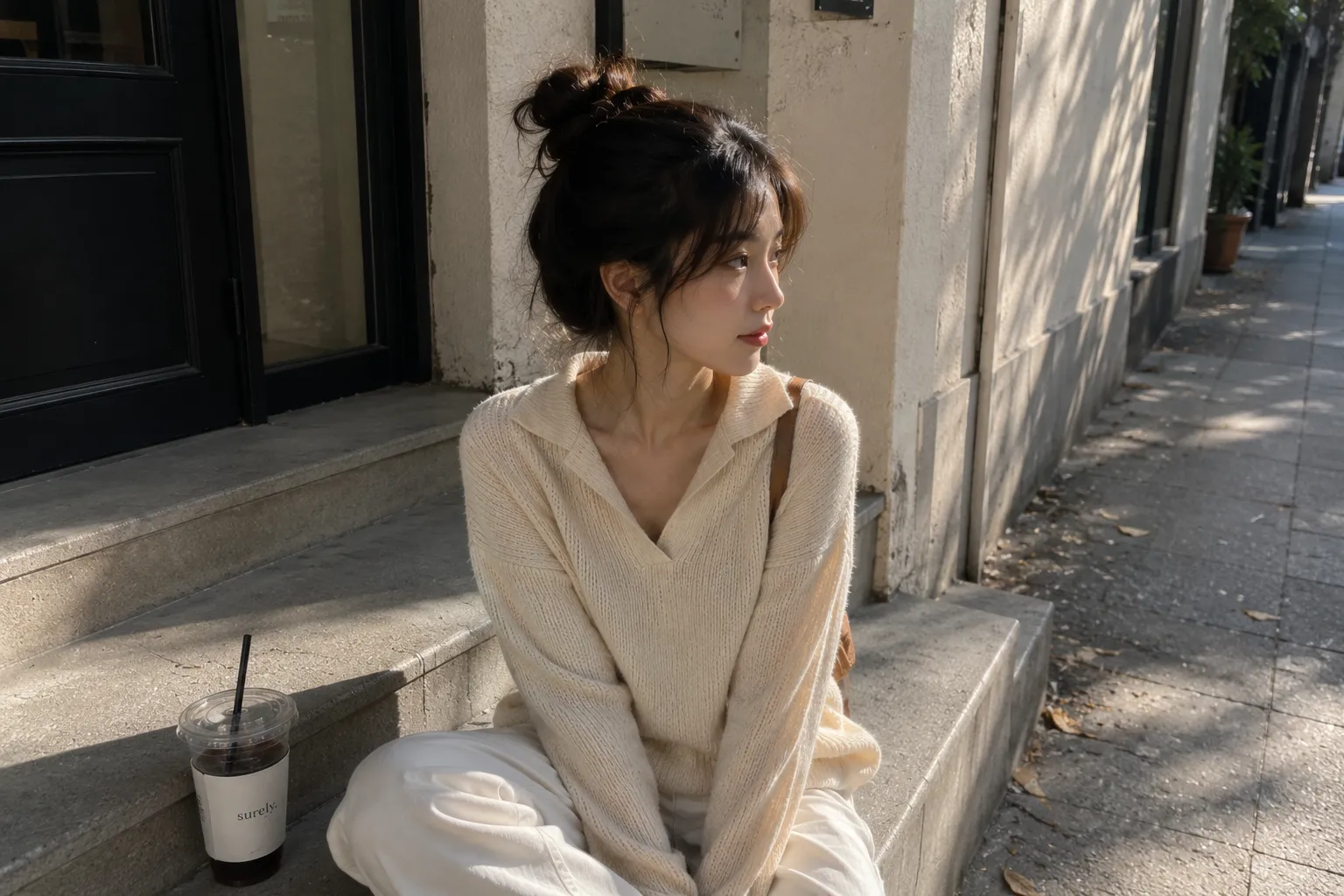
Looking at the camera feels clear and connected. Looking slightly away can feel quieter and less posed. Looking at something in the scene makes the photo feel more like a real moment.
Try this short sequence:
- Look toward the camera.
- Look just past the photographer.
- Look down briefly.
- Look back up.
This gives you several expressions without holding the same smile.
Let the Environment Suggest the Pose
When you do not know how to pose for photos, stop looking only at your body and look at the location.
The scene may already offer a simple action:
- walk along a sidewalk
- lean lightly near a wall
- rest a hand on a safe railing
- sit near the edge of a bench
- look through a shop window
- turn toward a view or landmark
Using the environment connects the pose to the place and gives you something to focus on besides the camera.
Choose safe surfaces and avoid blocking walkways, entrances, or other people.
Ask for One Direction at a Time
“Pose naturally” is difficult advice because it does not explain what to change.
Small directions are more useful:
- “Take one slow step.”
- “Turn your shoulders slightly.”
- “Look toward the window.”
- “Relax your free hand.”
- “Look back at me.”
Change one detail between photos. When several instructions arrive at once, it becomes harder to stay relaxed.
The moment when you respond may look more natural than the final held pose.
Check the Camera Position Too
Sometimes the pose is not the problem.
Before starting again, the photographer can step farther back, move slightly left or right, hold the phone closer to eye level, or include more of the background.
The framing should match the photo. A travel picture may need more scenery. An outfit photo may need a full-body frame. A profile-style portrait may work better closer.
A small camera move can improve the same pose without asking you to change everything.
Use a Quick Posing Reset
When you feel stuck, try this simple reset:
- Place one foot slightly forward.
- Shift your weight comfortably.
- Turn your body a little away.
- Relax your shoulders.
- Give one hand a task.
- Look away, then back.
- Take one slow step.
You do not need to perform every step perfectly. The sequence simply gives you somewhere to begin. Keep the parts that feel natural and change the rest.
Find a Starting Point for the Scene
A cafe, city street, beach, and hotel balcony do not offer the same light, space, or objects to interact with. The pose should change with the location.
Pajoox helps you explore pose ideas, phone angles, composition guidance, and visual references based on the real scene in front of you. Instead of scrolling through unrelated poses, you can start with the place and choose an idea that fits the moment.
Treat any suggestion as a starting point rather than a strict script. Adjust the movement, hand position, or camera distance until it feels comfortable.
Final Thoughts
When you do not know how to pose for photos, you do not need to invent a perfect pose.
Start with your feet, soften your shoulders, give your hands one simple task, and add a small movement. Use the environment for direction, and ask the photographer to change one detail at a time.
Good posing is less about holding a flawless position and more about creating enough movement and direction to feel present in the photo.