Posen für Fotos mit Freunden: Natürlich statt gestellt
Entdecke natürliche Posen für Fotos mit Freunden im Park, Café, auf dem Campus oder unterwegs – mit Tipps zu Gruppenaufstellung, Bewegung und Handywinkeln.
Von Pajoox-Redaktion · 15.08.2026

Fotos mit Freunden wirken oft ganz unkompliziert – bis plötzlich alle vor der Kamera stehen. Eine Person weiß nicht, wohin mit den Händen, eine andere wird von jemandem verdeckt und am Ende hält die ganze Gruppe dasselbe Lächeln fest.
Natürliche Posen für Fotos mit Freunden geben der Gruppe meist etwas, das sie gemeinsam tun kann. Gehen, reden, locker zusammensitzen oder aufeinander reagieren sorgt ganz von selbst für kleine Unterschiede in Haltung und Gesichtsausdruck. Das Ziel ist nicht, dass alle genau gleich aussehen. Die Gruppe soll miteinander verbunden wirken.
Beginnt mit einem Gespräch statt mit einer Pose
Bevor alle direkt in die Kamera schauen, lasst die Gruppe ein paar Sekunden miteinander reden.
Eine Person kann eine Geschichte erzählen, eine Frage stellen oder auf etwas in der Nähe zeigen, während mehrere Fotos aufgenommen werden. So wenden sich die Freunde automatisch einander zu und ihre Gesichtsausdrücke verändern sich.
Nach einigen spontanen Aufnahmen kann die Gruppe zur Kamera schauen, ohne ihre Positionen zu verändern. So entsteht ein klareres Gruppenfoto, während die Anordnung weiterhin entspannt wirkt.
Probiert ein Foto beim Gehen
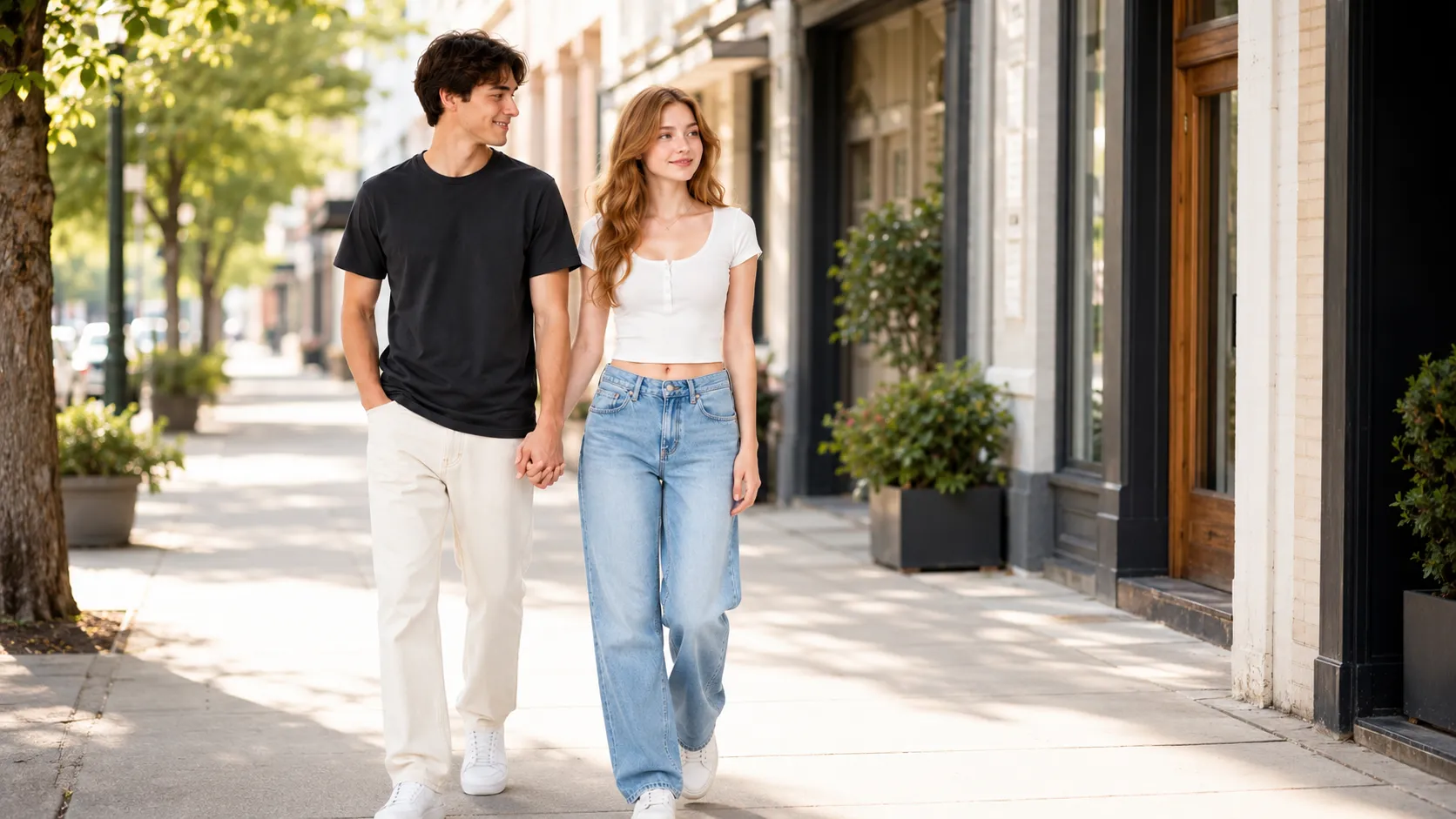
Gehen gehört zu den einfachsten Posen für Fotos mit Freunden, weil die Gruppe bereits eine gemeinsame Bewegung hat.
Sucht einen breiten, sicheren Weg und geht langsam auf die fotografierende Person zu oder quer durch das Bild. Dabei könnt ihr miteinander reden, euch ansehen oder kurz in die Kamera blicken.
Für ein natürlicheres Ergebnis:
- bleibt nah beieinander, aber steht nicht Schulter an Schulter
- lasst die Arme normal mitschwingen
- macht kleinere Schritte als gewöhnlich
- schaut nicht alle in dieselbe Richtung
- nehmt während der Bewegung mehrere Fotos auf
Die fotografierende Person sollte an einer stabilen Stelle stehen bleiben, statt rückwärtszugehen. Wege im Park oder auf dem Campus, Fußgängerzonen und Strände eignen sich dafür gut.
Vermeidet eine perfekte gerade Reihe
Eine gerade Reihe ist praktisch, wenn jedes Gesicht sichtbar sein soll. Ein lockeres Foto kann dadurch aber schnell förmlich wirken.
Probiert eine freiere Anordnung:
- stellt eine oder zwei Personen einen halben Schritt nach vorn
- dreht die Körper leicht zur Mitte
- lasst die Freunde in unterschiedlichen Winkeln stehen
- nutzt eine Bank, eine Stufe oder eine niedrige Sitzfläche für zwei Ebenen
Achtet auf eine ausgewogene Anordnung, damit niemand im Bild deutlich größer als die anderen erscheint.
Nehmt zuerst eine geordnete Variante auf. Danach können sich alle etwas entspannen und für das nächste Foto leicht bewegen.
Gebt jeder Person eine andere kleine Bewegung
Wenn alle ihre Hände auf dieselbe Weise halten, kann das Foto zu stark inszeniert wirken.
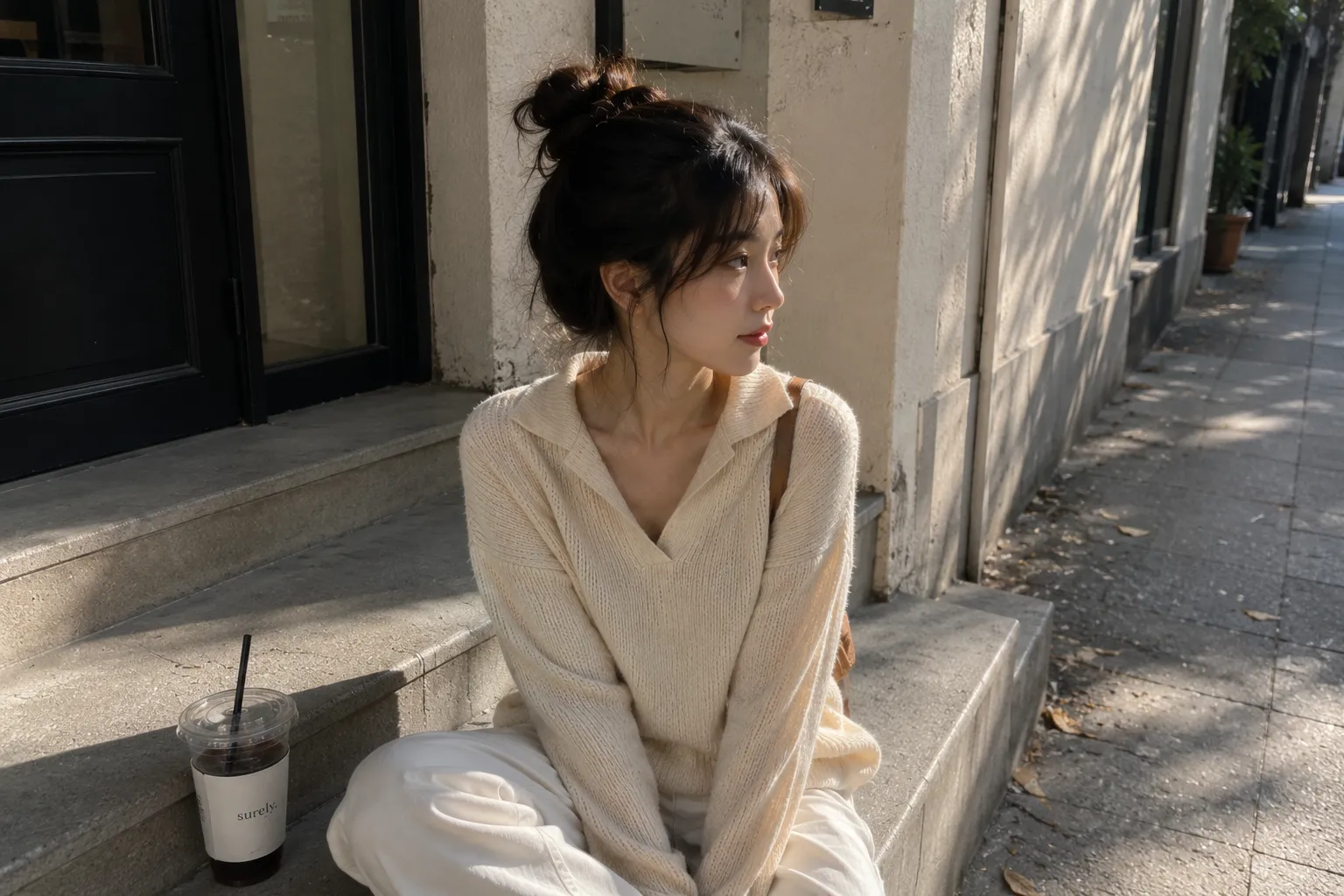
Gebt jeder Person eine einfache Handlung, die zur Umgebung passt. Eine Person kann den Träger ihrer Tasche halten, eine andere einen Ärmel richten und jemand anderes eine Hand locker an die Hosentasche legen. Im Café kann eine Person eine Tasse halten, während eine andere auf die Speisekarte schaut.
Die Handlungen sollten alltäglich und nicht theatralisch wirken. Kleine Unterschiede helfen allen, sich wohlzufühlen, während die Gruppe trotzdem zusammengehörig erscheint.
Nutzt natürliche Posen im Sitzen
Sitzende Posen funktionieren gut in Parks, Cafés, auf dem Campus und an Reisezielen.
Auf einer Bank können alle leicht unterschiedlich sitzen, statt in einer Reihe gerade nach vorn zu schauen. Eine Person kann sich vorbeugen, um einer anderen zuzuhören, während jemand anderes einen Arm locker auf der Rückenlehne ablegt.
Auf einer Picknickdecke oder einer erlaubten Rasenfläche könnt ihr euch in einem lockeren Halbkreis anordnen. Einige sitzen im Schneidersitz, während andere die Knie anwinkeln oder sich auf einer Hand abstützen.
Achtet darauf, dass alle Gesichter sichtbar bleiben und niemand direkt hinter einer anderen Person sitzt. Bei einer Gruppe auf dem Boden kann das Handy etwas höher gehalten werden. Ein extrem steiler Winkel von oben ist jedoch meist nicht nötig.
Schafft kleine Interaktionen in einer großen Gruppe
Große Gruppen lassen sich nur schwer auf einmal anleiten.
Teilt den Moment in kleinere Interaktionen auf. Zwei Freunde können miteinander reden, während die anderen zuhören. Ein Paar kann ein wenig vorausgehen. Eine Person kann einer anderen etwas auf einem Handy oder einer Karte zeigen.
Solche kleinen Gruppen schaffen mehr Tiefe und lassen das Foto weniger danach aussehen, als würden alle auf Anweisungen warten.
Nehmt zuerst ein weites Gruppenfoto auf und danach einige nähere Bilder dieser Interaktionen.
Achtet darauf, dass sich Gesichter nicht überdecken
Vor der Aufnahme sollte die fotografierende Person prüfen, ob jedes sichtbare Gesicht genügend eigenen Raum hat.
Ist jemand verdeckt, kann die Person einen halben Schritt nach links oder rechts gehen. Freunde in der hinteren Reihe müssen sich eventuell etwas aufrichten oder in eine Lücke zwischen den Schultern bewegen.
Nehmt bei einer größeren Gruppe mehrere Bilder auf. Jemand kann blinzeln oder sich gerade wegdrehen. Mit einigen ähnlichen Varianten findet ihr leichter ein Foto, auf dem alle gut sichtbar sind.
Passt die Pose an den Ort an
Die beste Pose für ein Foto mit Freunden hängt davon ab, was die Gruppe gerade macht.
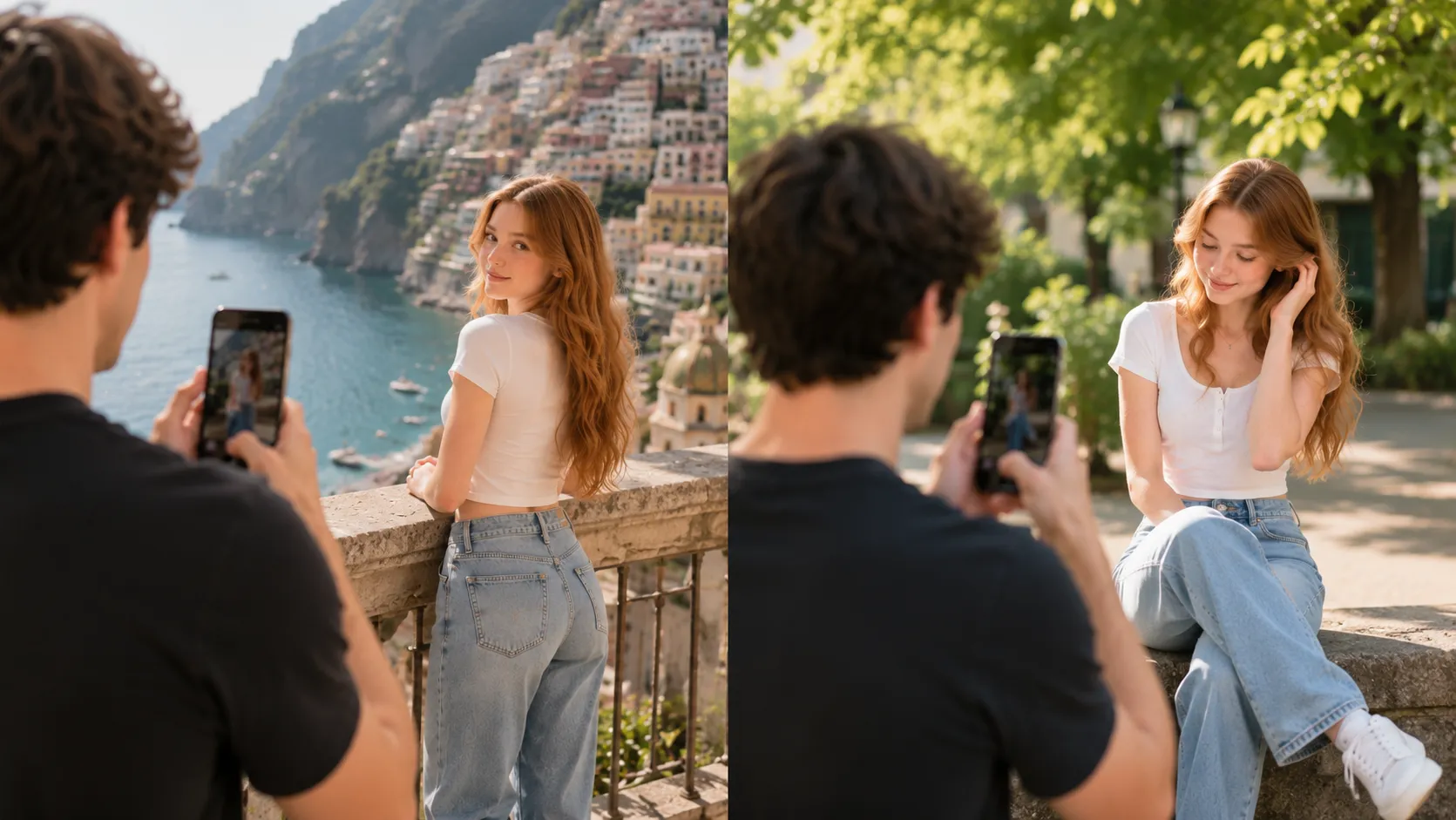
Im Café könnt ihr Gespräche, Tassen, Speisekarten und einen seitlichen Blickwinkel im Sitzen nutzen. Im Park bieten sich Gehen, Sitzen auf einer Decke oder eine lockere Gruppe an einer Bank an. In der Stadt könnt ihr Schaufenster, Wände und sichere Fußwege einbeziehen. Auf Reisen sollte genügend Platz für die Sehenswürdigkeit oder Aussicht bleiben.
Der Ort sollte der Gruppe einen natürlichen Grund geben, an einer bestimmten Stelle zu stehen, zu sitzen, sich zu bewegen oder in eine Richtung zu schauen.
Wählt einen passenden Handywinkel für die Gruppe
Augenhöhe ist für die meisten Fotos mit Freunden ein zuverlässiger Ausgangspunkt.
Bei einer stehenden Gruppe solltet ihr weit genug zurückgehen, damit alle ins Bild passen, ohne aus kurzer Entfernung eine extreme Weitwinkeleinstellung zu verwenden. Bei einer sitzenden Gruppe kann das Handy näher auf deren Höhe abgesenkt werden. Fotografiert ihr Menschen auf dem Boden, kann ein leicht höherer Winkel sinnvoll sein.
Platziert Freunde nicht ganz am Rand einer Ultraweitwinkelaufnahme, da Gesichter und Körper dort gestreckt wirken können.
Nehmt ein weites Foto mit der Umgebung, ein mittleres Gruppenfoto und einige nähere Bilder von natürlichen Interaktionen auf.
Haltet das Fotografieren kurz und angenehm
Für Fotos mit Freunden sollte niemand lange in einer unbequemen Pose bleiben müssen.
Gebt immer nur eine Anweisung:
- „Geht auf mich zu.“
- „Dreht euch zueinander.“
- „Redet einfach weiter.“
- „Rückt einen halben Schritt näher zusammen.“
- „Schaut jetzt in die Kamera.“
Respektiert es, wenn jemand nicht fotografiert oder online veröffentlicht werden möchte. Blockiert an öffentlichen Orten keine Wege und versucht, fremde Personen im Hintergrund nicht deutlich erkennbar aufzunehmen.
Findet eine Idee, die zur echten Szene passt
Eine Gruppe im Café, am Strand, auf dem Campus, im Park oder an einem Zwischenstopp auf Reisen braucht nicht dieselbe Pose oder denselben Handywinkel.
Fragt euch vor der Aufnahme:
- Stehen die Freundschaft, der Ort oder die Aktivität im Mittelpunkt?
- Würden Gehen, Sitzen oder ein Gespräch am natürlichsten wirken?
- Hat jedes Gesicht genügend Raum?
- Sollte das Bild mehr von der Umgebung zeigen?
- Lässt sich das Foto aufnehmen, ohne andere Menschen zu stören?
Pajoox hilft euch, auf Grundlage der realen Szene vor euch passende Posenideen, Handywinkel, Hinweise zum Bildaufbau und Referenzbilder zu entdecken. Statt jede Gruppe in dieselbe Anordnung zu zwingen, könnt ihr von den Menschen, dem Ort und der Aktivität ausgehen, die tatsächlich vorhanden sind.
Fazit
Für die besten Posen auf Fotos mit Freunden müssen nicht alle auf dieselbe Weise dastehen.
Beginnt mit einem Gespräch, einem gemeinsamen Spaziergang oder einer anderen einfachen Aktivität. Nutzt eine lockere Anordnung, gebt den Personen unterschiedliche kleine Bewegungen und achtet darauf, dass keine Gesichter verdeckt werden. Nehmt ein klares Foto mit Blick in die Kamera auf und fotografiert anschließend weiter, während sich die Gruppe entspannt.
Das Foto sollte sich nach eurer Freundschaft anfühlen – nicht danach, als hätten alle sie für eine Pose unterbrochen.