
Photo Poses for Men: Natural Ideas That Don’t Feel Awkward
Try natural photo poses for men with simple ideas for standing, walking, sitting, hand placement, phone angles, and everyday locations.
By Pajoox Editorial Team · Jul 31, 2026
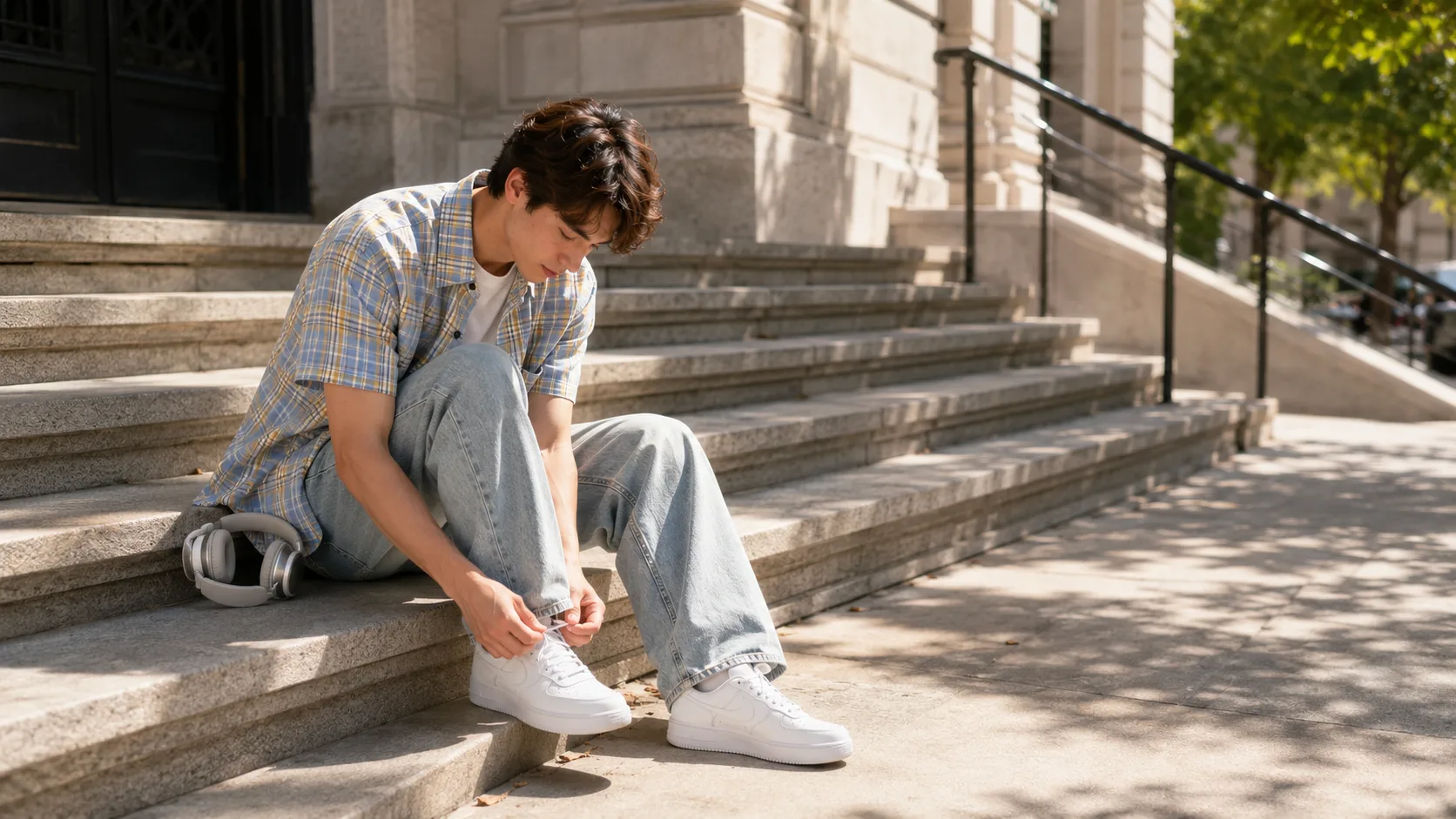
Getting photographed can feel surprisingly awkward when you do not have a go-to pose. You stand still, your shoulders rise, and suddenly both hands seem impossible to place.
The easiest photo poses for men are not complicated or dramatic. They begin with a comfortable stance, one simple action, and a camera angle that fits the setting. Instead of trying to look like a model, focus on giving your body something natural to do.
These ideas work for everyday photos, travel pictures, outfit shots, profile photos, and casual moments with friends.
Start With Your Feet and Weight
A relaxed pose usually begins below the shoulders.
Standing with both feet even and your weight centered can make the body feel rigid. Move one foot slightly forward or to the side, then shift more weight onto one leg.
Try:
- placing one foot half a step ahead
- turning both feet slightly away from the camera
- bending one knee a little
- pausing in the middle of a slow step
Keep the position comfortable. You should still be able to move rather than feeling locked into place.
Relax Your Shoulders Before the Photo
People often raise their shoulders without noticing when a camera appears.
Before the photo, take a breath, roll your shoulders once, and let them fall naturally. Turn your body slightly instead of facing the camera completely straight.
One shoulder can sit a little closer to the lens while your face turns back toward the camera. Avoid forcing your chest forward or pulling your shoulders back too far. Comfortable posture usually looks more natural.
What to Do With Your Hands
Not knowing where to put your hands is one of the most common posing problems. The simplest solution is to give one hand a real task.
You can:
- place one hand loosely in a pocket
- hold a jacket, bag strap, or backpack strap
- adjust a cuff, sleeve, collar, or watch
- hold a phone, coffee cup, or sunglasses
- rest one hand lightly on a railing or table
- let one arm hang naturally while the other is occupied
You do not need to hide both hands. Sometimes leaving one arm relaxed by your side looks better than arranging everything carefully.
If you use a pocket, keep the hand loose. Try placing only the thumb inside instead of pushing the whole arm tightly into it.
Use a Slow Walking Pose
Walking is one of the easiest ways to stop overthinking a photo.
Ask the photographer to stand safely ahead or to one side while you take two or three slow steps. Look forward, glance to the side, or briefly look toward the camera.
Keep your arms moving normally and make the steps smaller than usual. The photographer should take several frames during the movement.
Walking works well on city streets, park paths, beaches, hotel corridors, and travel locations. It gives the body a reason to move and often produces a more relaxed expression.
Try a Simple Lean
A wall, column, railing, or table can give you a clear place to stand.
Instead of pressing your whole body against the surface, use a light connection:
- rest one shoulder near a wall
- place one hand on a railing
- lean back slightly, then step forward
- stand beside a column and turn toward the camera
- rest one forearm on a table
Keep most of your weight supported by your feet. Only use stable, permitted surfaces, and avoid blocking a walkway.
Use Sitting Poses for More Variety
A bench, chair, step, or low ledge can create a relaxed alternative to standing.
Sit near the front edge rather than sinking all the way back. Place both feet securely on the ground, move one foot slightly forward, or rest your forearms loosely on your thighs.
You can look toward the camera, turn toward the surroundings, or interact with something already in the scene. The photographer should move closer to your seated height rather than shooting sharply downward.
Look Away, Then Back
You do not need to stare into the camera for every frame.
Try a short sequence:
- Look past the photographer.
- Look down briefly.
- Turn toward something nearby.
- Look back at the camera.
This creates several expressions without asking you to hold one smile. A small turn is enough; avoid twisting your neck or tilting your head unnaturally.
Match the Pose to the Outfit and Setting
The same pose will not feel right everywhere.
For a casual outfit, walking, leaning lightly, or adjusting a jacket may fit the mood. For a profile photo, use a simple standing pose with relaxed shoulders and a clear background. During travel, let the landmark, street, beach, or viewpoint remain visible.
Look for something useful in the scene:
- a path that suggests walking
- a wall or corner
- a bench or table
- a window or storefront
- a view worth looking toward
- an object you are already holding
When the pose belongs in the location, it feels less like posing.
Check the Phone Position
Sometimes the body position is fine, but the camera is too close, too low, or tilted.
Eye level is a useful starting point for most portraits. For a full-body photo, the photographer can step back and hold the phone around waist or chest height while keeping it straight.
Try moving the camera one step farther back, slightly left or right, or closer to eye level before changing the pose. Avoid placing a wide phone lens very close to the subject, especially near the edges of the frame.
Use a Quick Reset When You Feel Stuck
When a pose starts to feel awkward, reset instead of fixing every detail at once:
- Move one foot slightly forward.
- Shift your weight onto one leg.
- Turn your body a little.
- Drop your shoulders.
- Give one hand a task.
- Look away, then back.
- Take one slow step.
Keep whichever parts feel comfortable. The sequence is only a starting point.
Find an Idea That Fits the Real Scene
A city corner, hiking trail, cafe, beach, and hotel room all offer different light, space, and objects to interact with.
Pajoox helps you explore pose ideas, phone angles, composition guidance, and visual references based on the real scene in front of you. Instead of copying one pose everywhere, you can start with the location and choose an idea that makes sense there.
Treat any suggestion as a first direction, then adjust the stance, hand position, or camera distance until it feels natural.
Final Thoughts
Natural photo poses for men do not need to look serious, dramatic, or carefully rehearsed.
Start with a comfortable stance, relax your shoulders, and give one hand something simple to do. Add movement when standing still feels awkward, and use the environment to make the pose easier.
Take several frames while moving between positions. The best photo may happen after you stop thinking about the pose and return to the moment.


