7 Easy Pose Ideas for Better Everyday Phone Photos
Simple everyday pose ideas for more natural phone photos, from shifting your weight to using backgrounds, movement, and small hand actions.
By Pajoox Editorial Team · Jun 19, 2026
Everyday photos often happen quickly: a friend lifts a phone, someone says “stand there,” and suddenly you have to decide what to do with your face, hands, feet, and body. That pressure can make a simple photo feel awkward. The good news is that better everyday photos usually do not require dramatic posing. They come from small choices that help the photo feel intentional.
These pose ideas are designed for normal moments: walking around the city, taking an outfit photo, standing near a cafe window, snapping a picture before dinner, or updating a casual profile shot. Use them as starting points, not rules. The best pose is the one that feels like you and fits the moment.
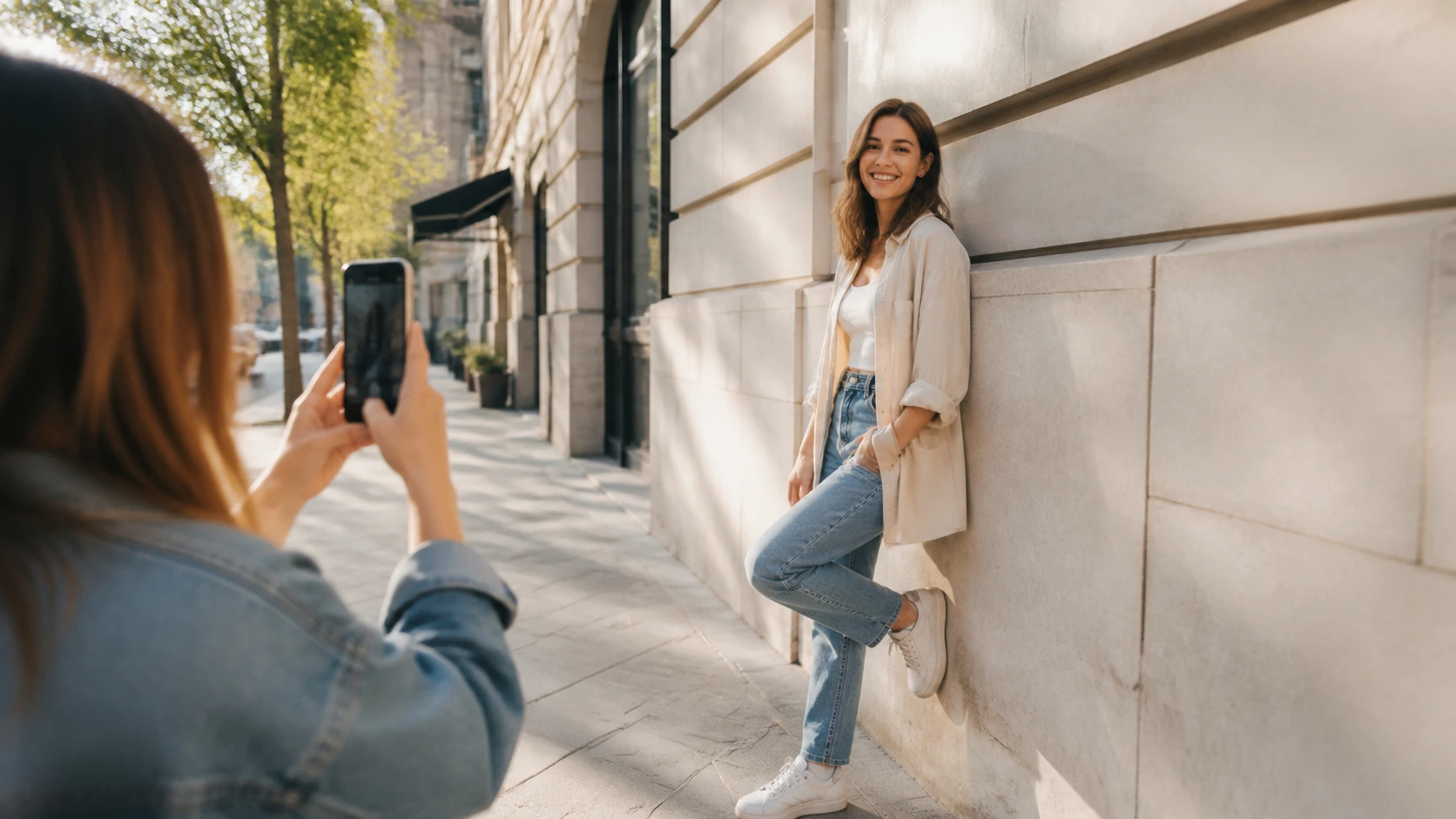
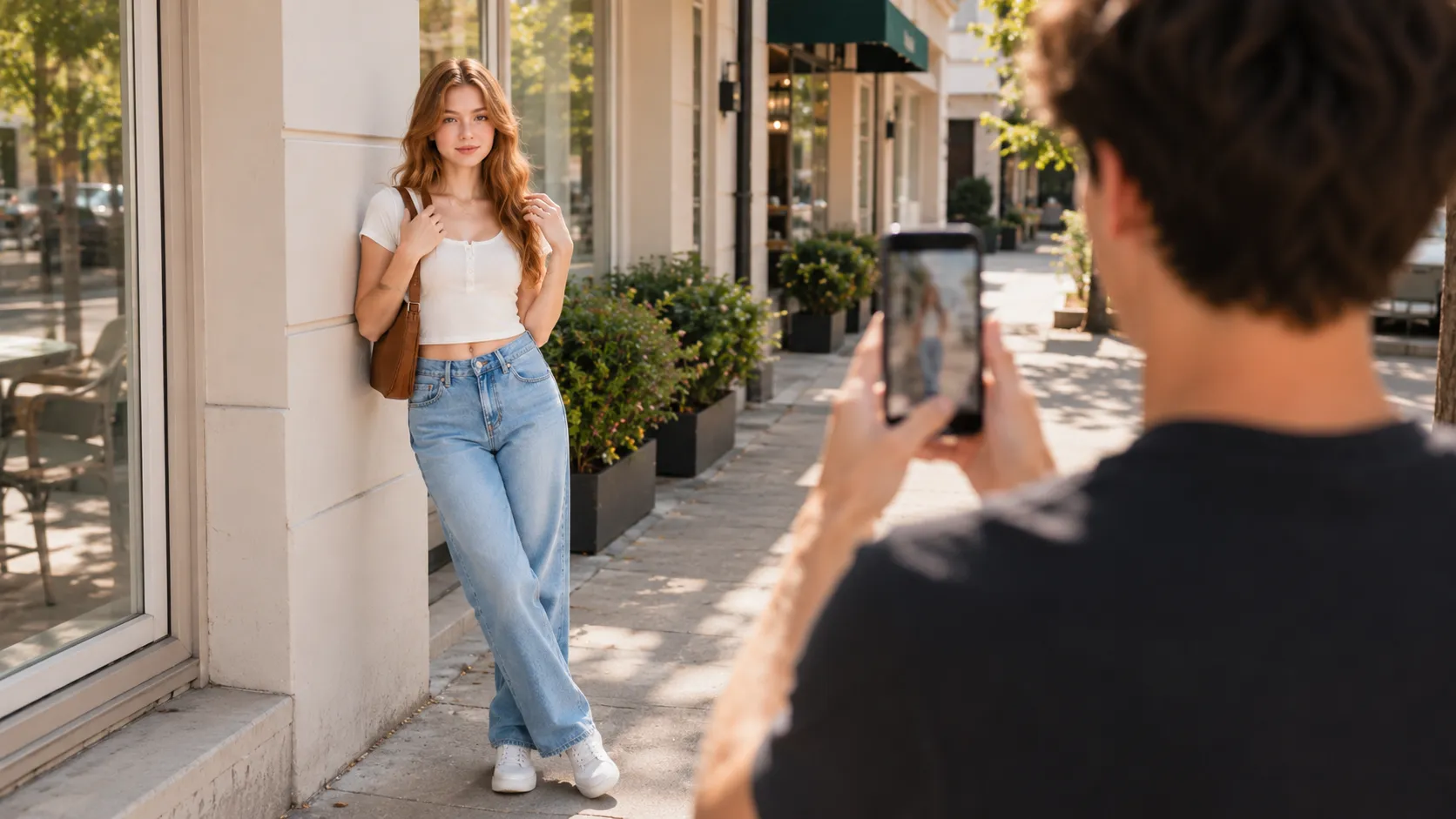
1. Shift your weight instead of standing flat
When you stand with both feet planted evenly, the pose can feel stiff because everything is facing the camera at the same time. Try shifting your weight to one leg and relaxing the other. Your shoulders can stay soft, your knees can loosen a little, and your body will naturally create a more relaxed line.
This works especially well for outfit photos and quick street shots. Place one foot slightly forward, let one knee bend, or angle your toes away from the camera. The goal is not to make a big shape. The goal is to avoid looking like you were frozen in place.
2. Give your hands a small job
Hands often feel awkward because they have nothing to do. Instead of hiding them or forcing them into a pose, give them a simple action. Hold a coffee cup, adjust a sleeve, touch the strap of a bag, put one hand in a pocket, or lightly hold your phone at your side.
Small hand actions make the photo feel more natural because they suggest a real moment. They also help the person being photographed relax. When you are not thinking “where do my hands go,” your face and posture usually feel calmer too.
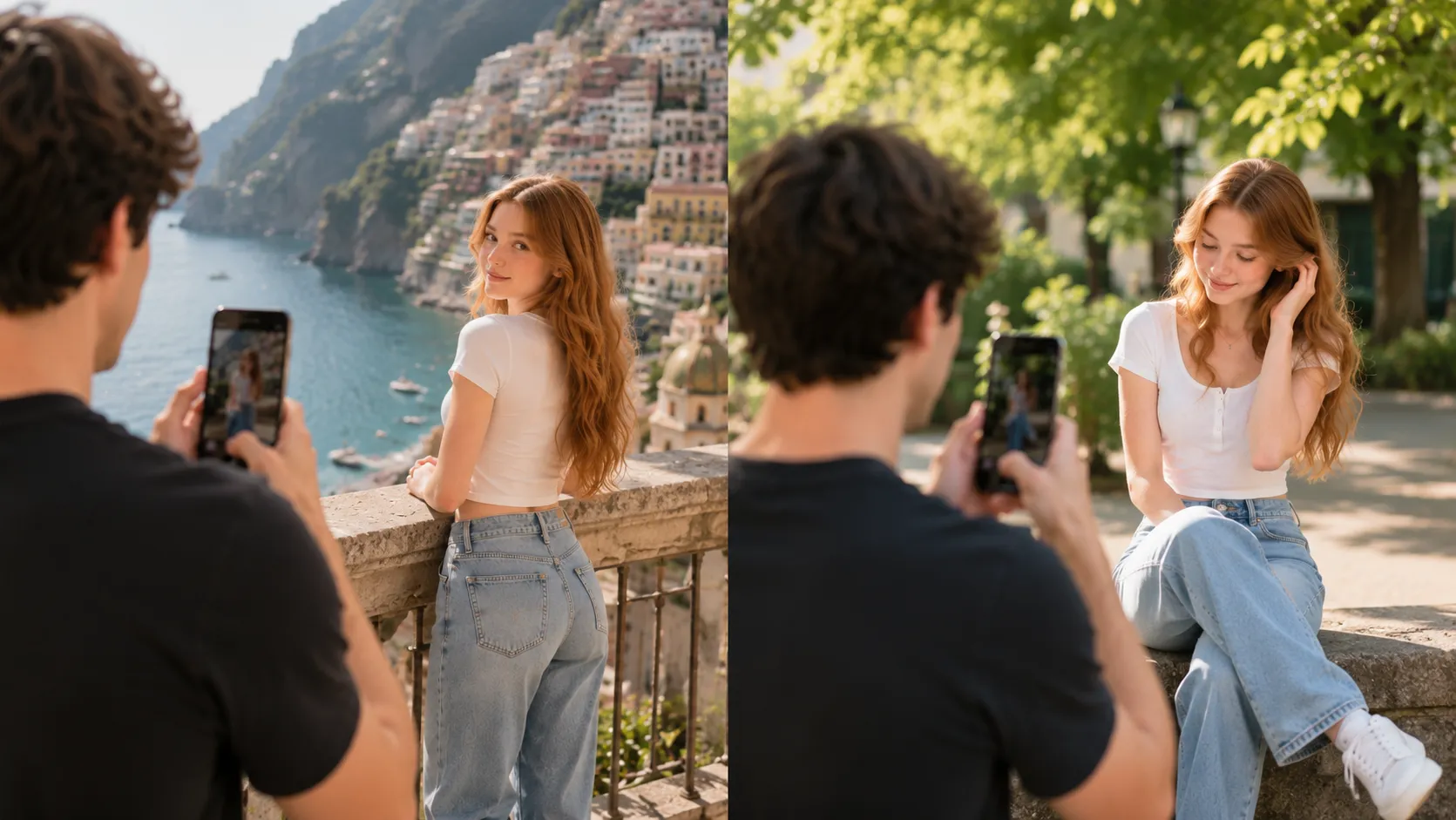
3. Turn slightly away, then look back
A full front-facing pose can work, but it is not always the easiest option. Try turning your body about 30 to 45 degrees away from the camera, then bring your face or eyes back toward the lens. This creates a sense of movement without needing to walk or perform.
You can use this pose almost anywhere: on a sidewalk, near a doorway, in a room, or next to a travel landmark. For a softer version, look just past the camera instead of directly into it. For a more connected version, look into the lens and keep your expression relaxed.
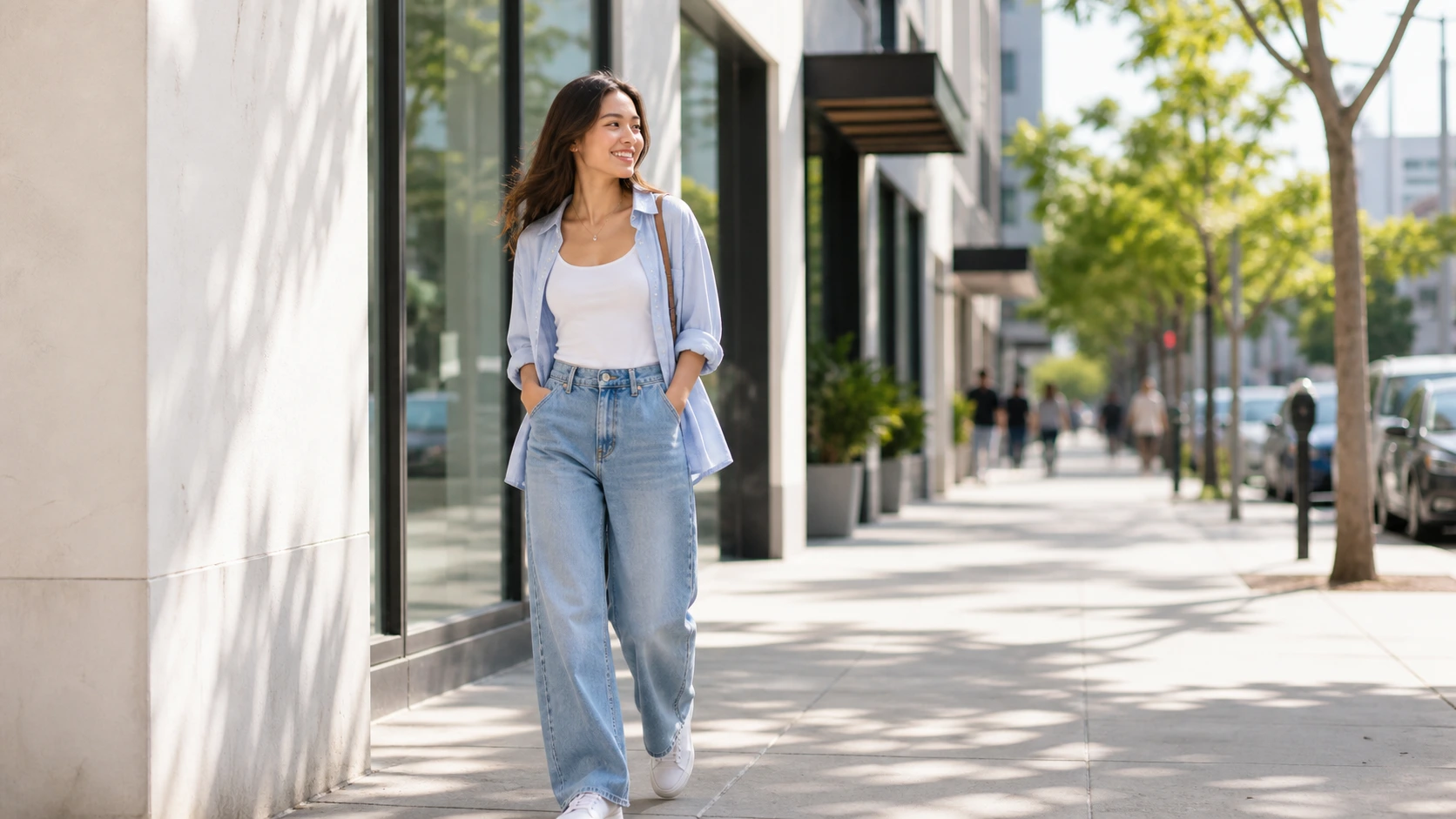
4. Take one slow step
Walking photos are popular because they make the body look less tense and the moment feel less staged. The trick is to move slowly. Take one small step, pause for half a second, and let the photographer capture the movement.
Keep your arms relaxed and let them move naturally. If you are wearing an outfit you like, this can show the clothing in motion. If the background is busy, walking can also help the photo feel more like a candid scene than a posed portrait.
5. Lean on something nearby
Look for safe, simple surfaces around you: a wall, railing, table edge, bench, doorway, or parked bicycle rack. Leaning slightly gives your body a natural anchor. It also helps the photo feel connected to the location.
The lean should be light. Rest a shoulder near a wall, place one hand on a railing, or sit on the edge of a bench with good posture. Avoid putting too much weight on anything unstable or blocking walkways in public places.
6. Use the “look away, look back” rhythm
If you feel nervous looking directly into the camera, build a rhythm. First look away, then glance back, then look down, then look back again. This gives the photographer several natural expressions to capture and keeps the moment from becoming too intense.
This rhythm is helpful for people who freeze when they hear “smile.” Instead of trying to hold one expression, you move through a few gentle options. Some shots may feel thoughtful, some may feel friendly, and some may feel playful.
7. Frame yourself with the environment
Everyday photos look stronger when the background has a purpose. Stand in a doorway, between two trees, beside a window, under a sign, or near a clean wall. These elements can frame you and make the photo easier to read.
Before taking the picture, check the edges of the frame. Is there a trash bin, pole, or random object cutting into the photo? Can you move one step left or right? Small composition changes often improve the shot more than a completely different pose.
A quick everyday photo checklist
Before the camera clicks, run through this simple checklist: shift your weight, give your hands a job, angle your body slightly, relax your shoulders, check the background, and take more than one frame. Pick two or three and the photo will usually feel more intentional.
It also helps to treat posing as a set of choices, not a performance. You can try a standing pose, a walking pose, a seated pose, and a looking-away pose in the same location. That gives you options without needing a full photoshoot.
How Pajoox can help
Pajoox is built for people who want practical pose and angle ideas before or during a photo moment. Instead of starting with a blank mind, you can explore pose ideas for everyday scenes, outfits, selfies, travel photos, and profile pictures. Pajoox uses AI-powered pose and angle guidance to help you choose a direction that fits the scene, but the focus stays on the result: a photo that feels comfortable, natural, and worth keeping.
Next time you are not sure how to pose, start with one small change. Shift your weight. Turn slightly. Give your hands something to do. Better everyday photos are often built from simple decisions like these.